
Halloween x drugstore glam: working with seasonal shorthand
Drugstore Halloween aisles are built almost entirely from visual shorthand. Plastic spiders, vampire teeth, fake fingers, artificial blood, and other familiar objects communicate the season immediately.
This series pairs that deliberately obvious Halloween vocabulary with another recognizable visual language: the clean, close-up product imagery of 1990s beauty advertising.
The contrast is part of the idea. Everyday cosmetics are treated with the precision and polish of a beauty campaign while inexpensive Halloween props interrupt the frame. Rather than disguising the clichés, the photographs rely on their familiarity.
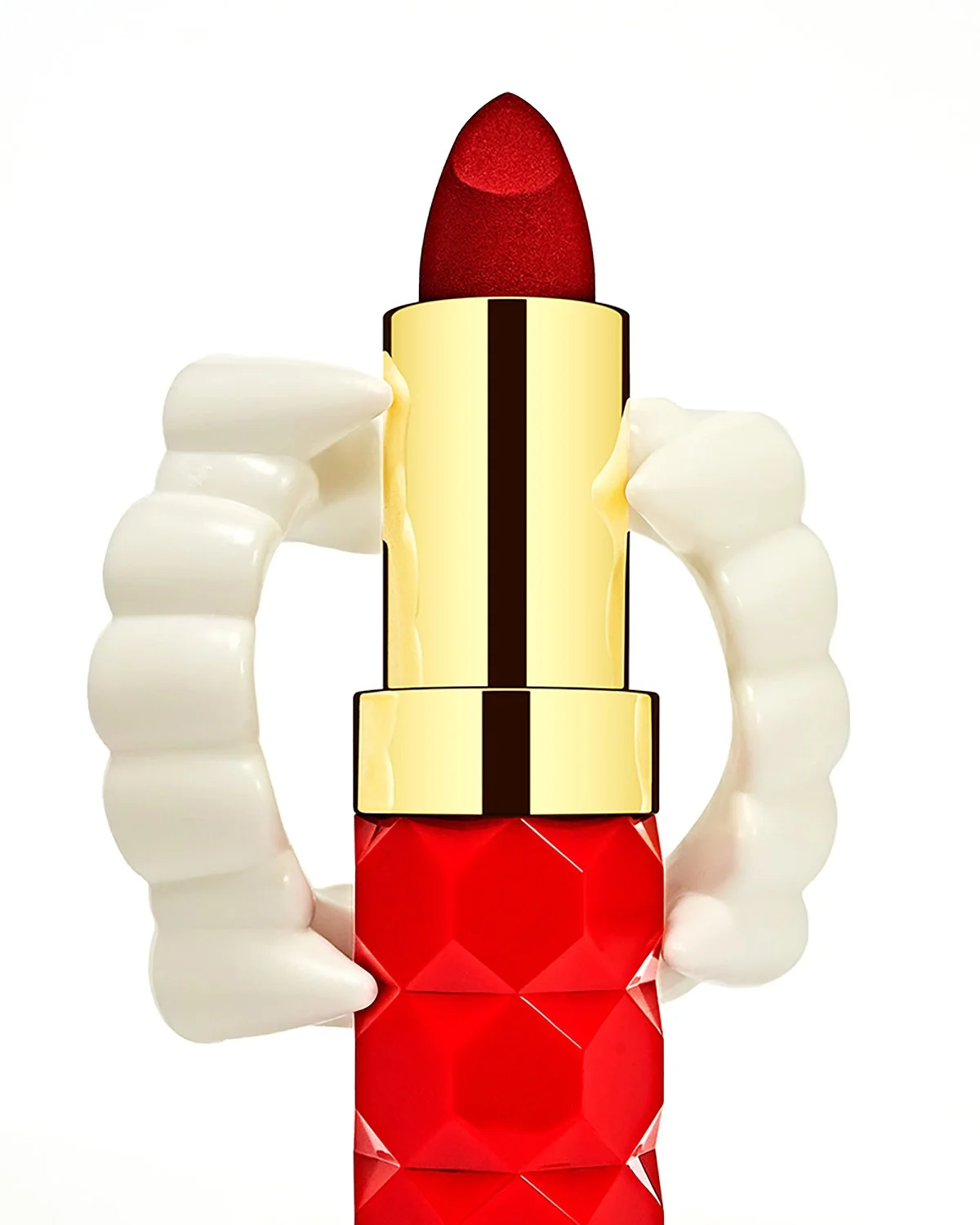
The shorthand is supposed to be obvious
Seasonal imagery often becomes more interesting when the expected symbols are avoided. This series takes the opposite approach.
A plastic spider does not need explanation. Neither do vampire fangs or a green witch finger. Their usefulness comes from being instantly legible, almost to the point of caricature.
That recognition allows the photographs to move quickly. There is no need to construct an elaborate Halloween environment because a single object can establish the season on its own.
The question becomes what happens when that object is removed from its usual setting and given a different photographic treatment.
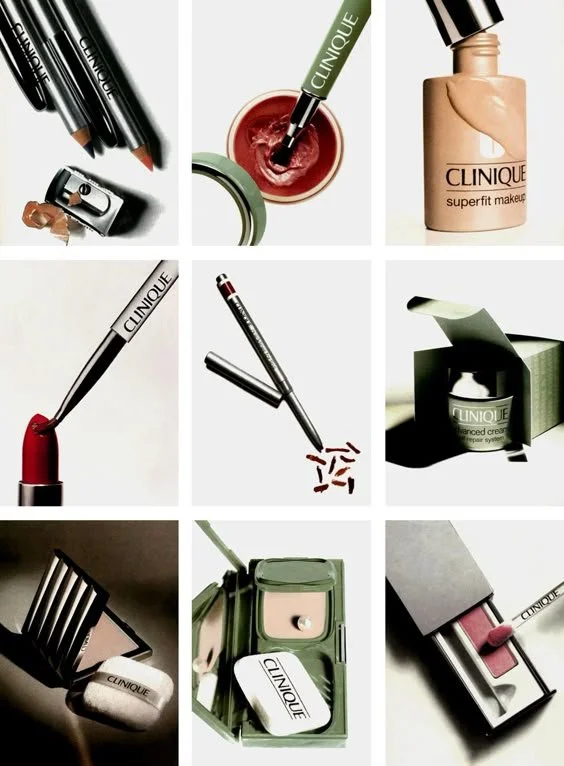
Beauty language changes the status of the prop
The visual reference for the series came partly from the beauty advertising I grew up seeing in the 1990s, particularly the close product studies associated with Clinique: white environments, tightly framed objects, clean light, and an almost clinical attention to surface and form.
Applied to drugstore Halloween props, that language creates a mismatch.
A cheap plastic finger receives the same compositional attention as a manicure. A spider becomes a precisely placed graphic element rather than set decoration. Vampire fangs are photographed closely enough for their molded plastic surfaces to become part of the image.
The props do not become convincing or luxurious. They remain visibly artificial.
What changes is the seriousness with which they are photographed.

The pairings need a relationship
The Halloween objects are not interchangeable decorations added around cosmetics.
Each pairing depends on some connection between the prop and the product.
A witch finger can wear nail polish because both objects meet at the manicure. A spider can crawl across a mascara wand because the wand itself becomes a narrow structure within the composition. Vampire fangs can bite into red lipstick because color, mouth, and the physical action of biting already connect the two objects.
Those relationships give the images more structure than a generic seasonal set would.
The prop introduces the Halloween reference, but the product determines how that reference is used.
That distinction keeps the objects from feeling merely scattered around the frame for effect.
Familiarity creates room for humor
Neither side of the pairing is obscure.
Drugstore cosmetics are familiar products. Halloween props are familiar seasonal objects. Putting them together creates a visual joke that can be understood almost immediately.
The photography does not need to emphasize the joke beyond that.
In fact, the more straightforward the treatment becomes, the stronger the mismatch can feel. Clean composition and controlled light give the images a level of formality that contrasts with the disposable, slightly ridiculous nature of the props.
The humor sits in that distance.
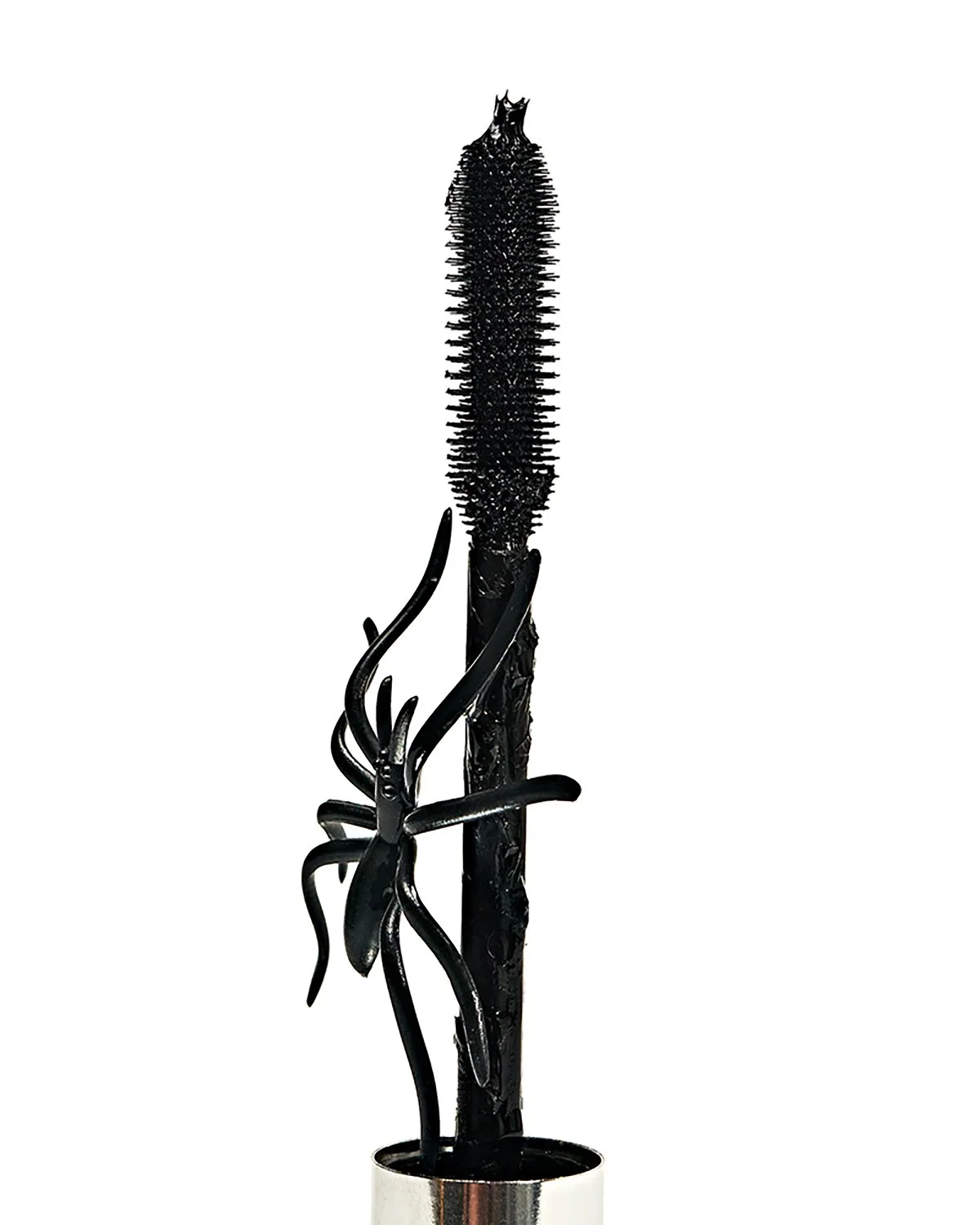
Using the cliché rather than avoiding it
Seasonal shorthand is often treated as something to escape. There are good reasons for that. Familiar symbols can make imagery feel predictable when they are used simply to announce a holiday.
But familiarity can also be the material of the idea.
Here, spiders, fangs, and witch fingers are useful precisely because they are clichés. They establish Halloween instantly, leaving the photographs free to concentrate on the relationship between those objects and the visual language of beauty.
The series does not reinvent Halloween.
It changes the context in which its most familiar objects appear.