Silence and stillness: exploring quiet transformation in the natural world

I spend a great deal of time outdoors, and this winter’s walks with my dog became an opportunity to pay closer attention to silence and stillness in the natural world.
Winter can appear dormant at first glance, but closer observation reveals constant, subtle change. Vines unfurl. Mushrooms emerge from old wood. Leaves dry and curl. Ice melts. Small traces of human and animal presence appear and disappear.
Those observations became the starting point for this series of still-life images rooted in quiet transformation.

Stillness is not empty
Even in winter, very little is truly static.
A new vine slowly extends its tendrils while mushrooms claim the surface of a stump. A fallen leaf changes color and texture as it dries. These processes are easy to overlook because they unfold gradually, without spectacle.
Stillness can make those smaller changes more visible. What initially appears inactive often contains growth, decay, movement, or transition occurring at a scale that requires closer attention.

The liminal spaces of silence
Silence also exists in the moments immediately after something has happened.
Smoke rising from an extinguished match is one example: the flame is gone, but its presence remains briefly visible. These suspended moments sit between activity and rest, carrying evidence of what came before without showing the event itself.
There is something compelling about that threshold. The action has passed, but the scene has not fully settled.

Relics of nature and humanity
Several images in the series bring natural and human-made objects into the same frame.
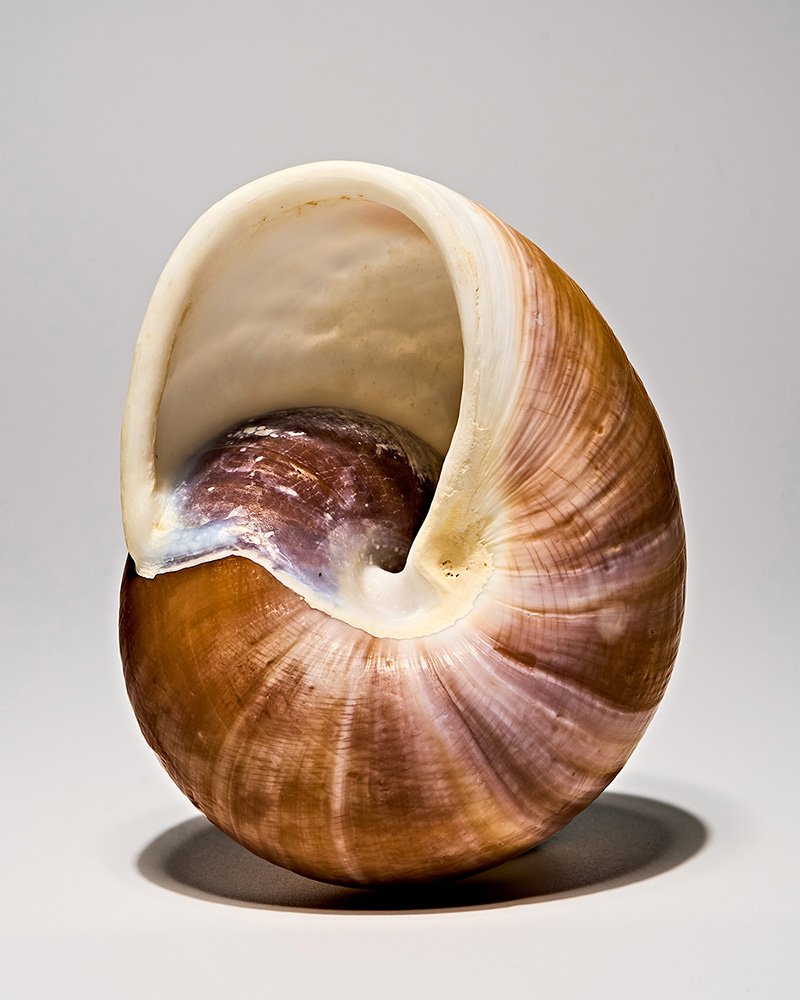
A brass bowl holds burnt matches beside a pebble and a mollusk shell collected from the Northern California coast. In another image, a stone supports a red-tailed hawk feather found in the woods.
These objects carry different histories and timescales, but each functions as a small relic. Some were shaped by natural processes. Others contain evidence of human presence. Together, they suggest the constant exchange between what we encounter, what we alter, and what remains behind.
Melting ice extends the same idea in a more immediate way. Its transformation is visible even while the image is being made. What appears solid is temporary, changing almost imperceptibly from one moment to the next.

Paying attention to what changes quietly
The series began with a simple act of observation.
Silence and stillness can suggest absence, but they can also create the conditions for noticing what is usually too gradual, small, or fleeting to command attention.
A curling vine. A burnt match. A feather balanced against stone. A block of ice beginning to lose its shape.
None of these moments is dramatic on its own.
Together, they form a study of the quiet transformations that continue whether or not we notice them.