
Personal care still life study: suggesting place without building a room
Personal care products carry an inherent relationship to place. Soap, brushes, combs, stone, ceramic, and other bath objects immediately suggest a private environment built around ritual and use.
For this series, the environment remains mostly outside the frame. Rather than constructing a literal bathroom, the photographs use fragments of architecture, natural materials, shadow, and depth to imply one.
The result sits somewhere between product still life and environmental imagery. The objects remain clearly defined, but they appear to belong to a larger space that is only partially visible.
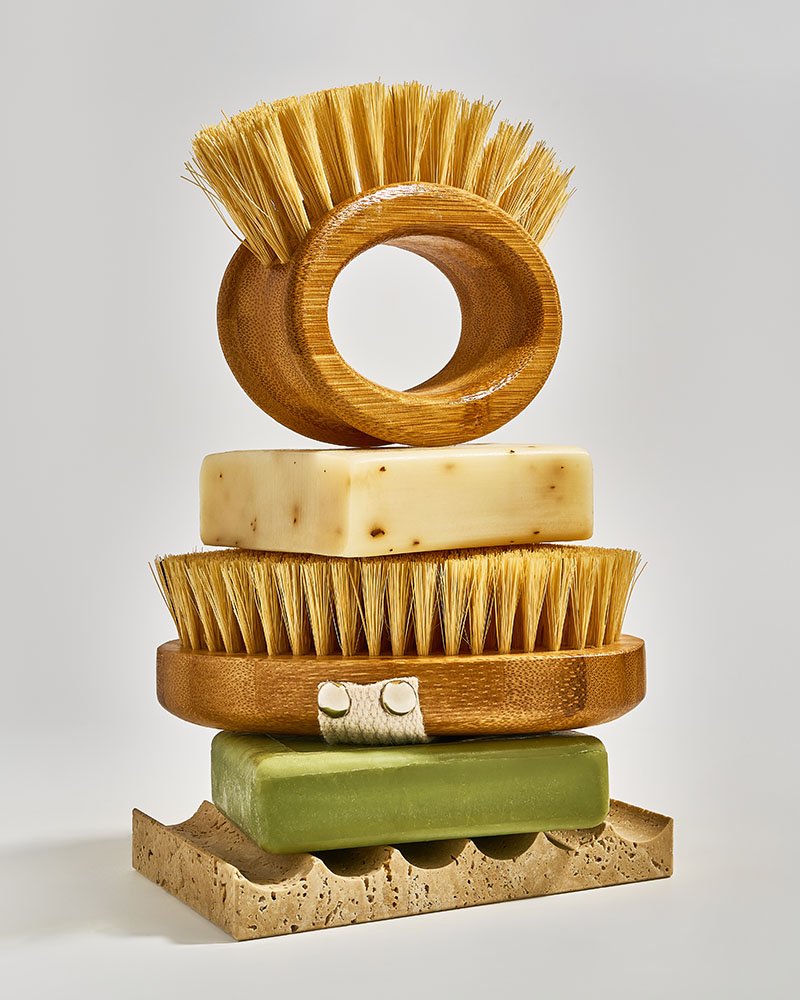
Suggesting space through fragments
A sense of place does not require showing an entire room.
Tile introduces an architectural cue. Cast shadow suggests light entering from somewhere beyond the frame. Stone and ceramic imply the harder surfaces of a bath environment without reproducing them literally.
These details establish context while leaving much of the setting unresolved. The viewer understands the type of space without being shown exactly where the objects are located.
That partial information keeps the compositions closer to still life than interiors photography. The environment supports the objects rather than becoming the subject itself.
Natural materials create the atmosphere
Ceramic, stone, wood, natural bristles, and soap provide much of the material language of the series.
Their surfaces respond differently to light. Stone holds subtle texture. Ceramic creates harder edges and cleaner highlights. Wood and bristles introduce irregularity and warmth against the more controlled geometry of the compositions.
Those relationships help create the bath environment without relying on obvious decorative cues. The materials already belong naturally to the world being suggested.
They also give the images a tactile quality. Even without touch, differences in weight, roughness, softness, and density remain visible.
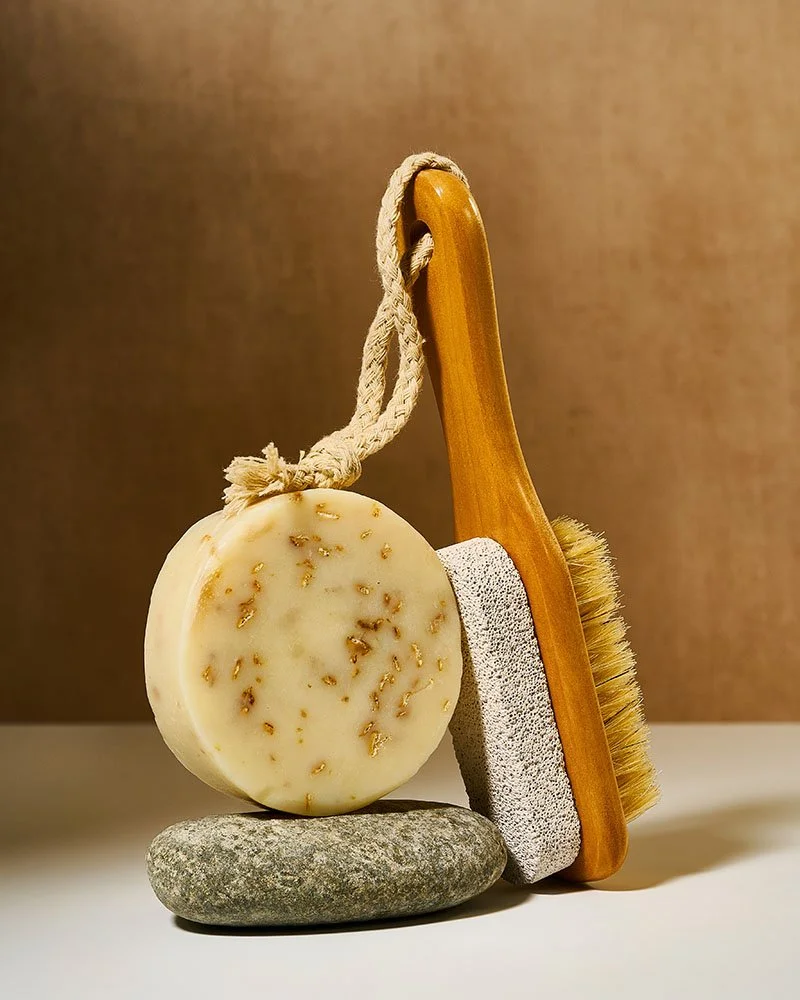
Small objects become sculptural
Several compositions move the objects away from their ordinary orientation.
Stacking introduces height and balance. A brush becomes a vertical form. A soap dish becomes a platform. Familiar functional objects begin to operate as shapes within the frame.
This shift in scale and arrangement gives relatively modest objects more visual presence. Their function remains recognizable, but form becomes equally important.
The compositions still refer to personal care, but they also allow the objects to behave more like a collection of small design pieces.
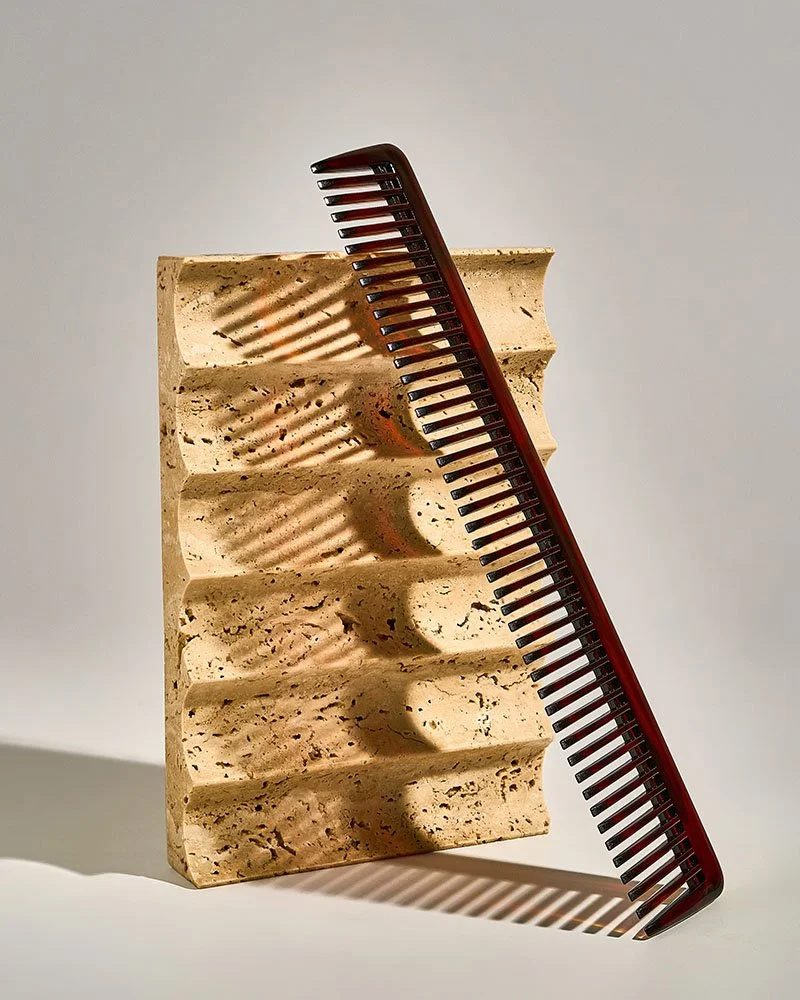
Soft focus expands the space
Selective focus changes the relationship between the object and its surroundings.
Rather than describing every surface with equal sharpness, parts of the set are allowed to recede. Foreground and background elements become softer, creating depth beyond the central subject and suggesting that the visible composition is only part of a larger environment.
That softness also changes the character of harder materials. Tile, ceramic, and stone become less architectural and more atmospheric when not every edge is equally defined.
The effect is subtle, but it helps move the series away from straightforward product documentation and toward something more immersive.
Building the bath without showing it
The bath environment in these photographs is assembled from implication.
Tile suggests architecture. Stone and ceramic establish surface. Wood, soap, and bristles introduce natural texture. Cast shadow creates a source of light outside the frame. Selective focus gives the objects space beyond the immediate set.
No individual element has to explain the environment completely.
Together, they create enough information for the space to exist without being fully constructed. That balance allows the imagery to retain the clarity of studio still life while carrying the atmosphere and sensory associations of a more specific place.
Planning a campaign or product shoot?
I help brands define the image library they actually need before production begins, then build still-life and product imagery designed to work across the full rollout.