
One image can do more than one job
Campaign imagery rarely stays where it was originally intended to live.
A photograph created for a homepage may later appear in an email, a paid placement, a product page, a retailer presentation, or a vertical social crop. By the time an image moves through a campaign, it may have been resized, cropped, paired with copy, or placed inside formats that weren’t visible when the original composition was made.
That flexibility isn’t created by the crop. It’s created much earlier, when the image is designed.
A frame has to survive its original composition
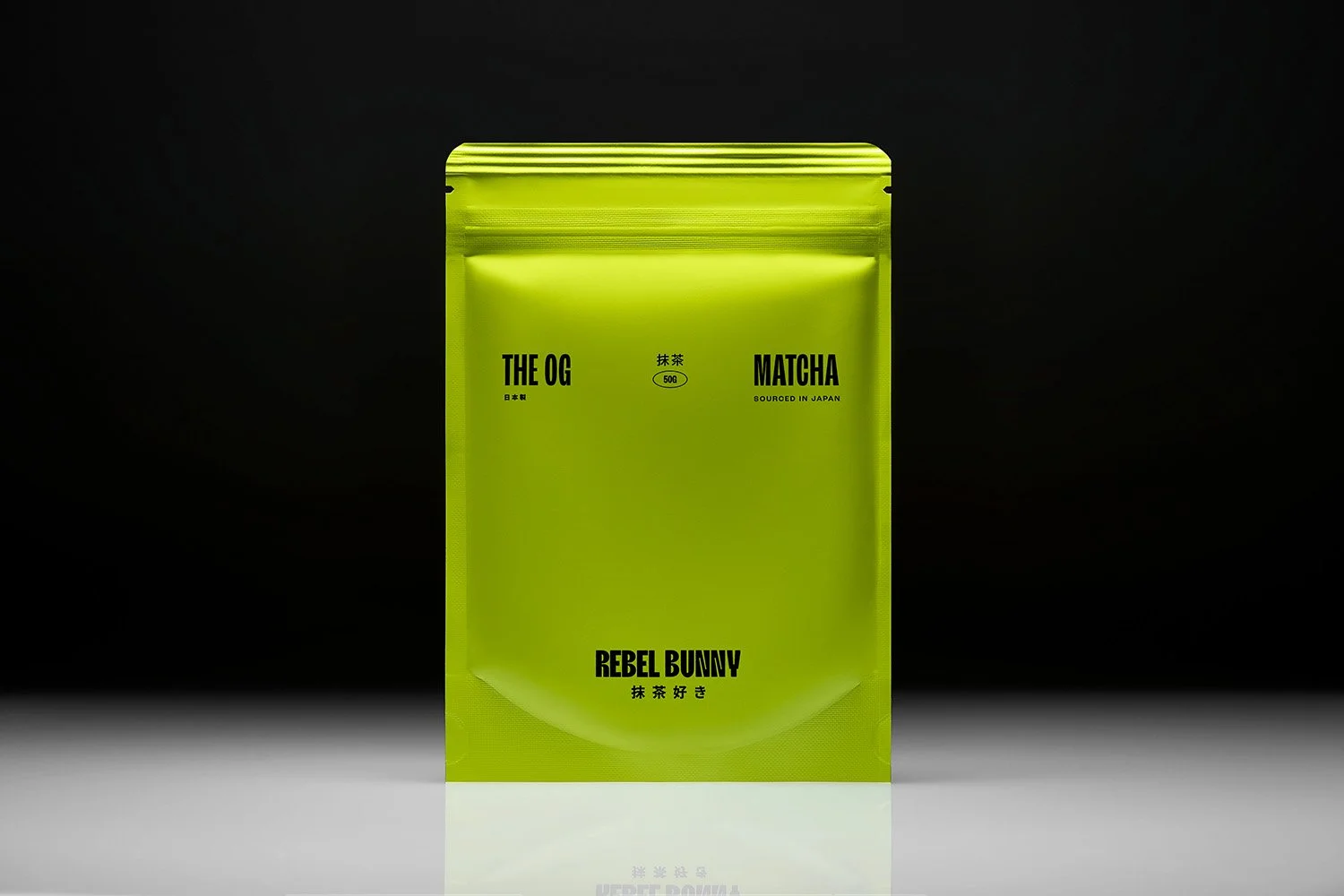
For the Rebel Bunny project, several images were built around relationships between the product, packaging, color, and negative space. The finished photographs needed to feel composed rather than loose, but they also couldn’t depend so heavily on the outer edges of the frame that the idea disappeared as soon as the image moved into another format.
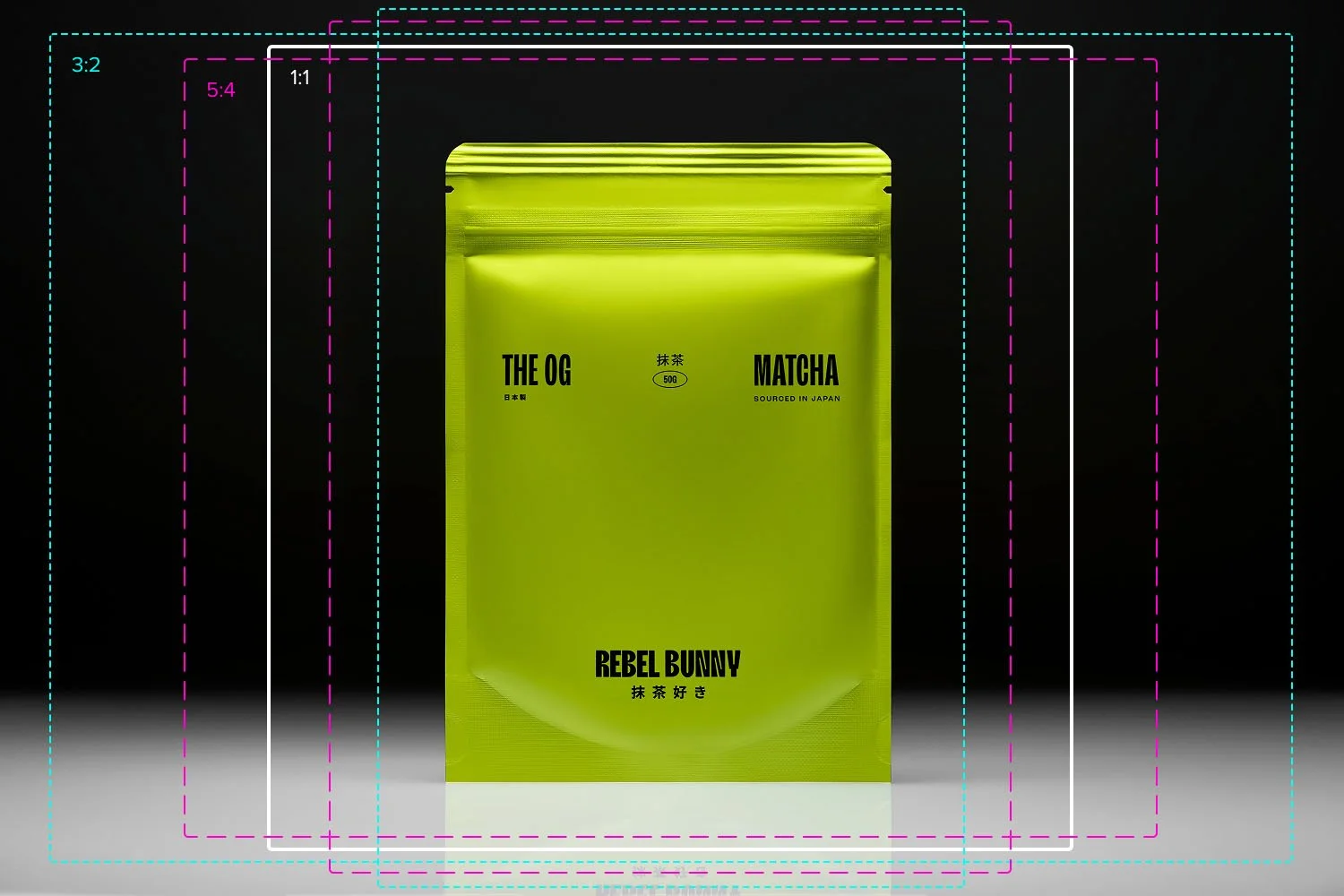
That changes how I think about the composition while shooting. The question isn’t simply whether the frame works at 3:2. It’s what happens when part of that frame is removed. Does the product relationship still read? Does the balance collapse? Does the negative space disappear? Does a secondary object suddenly become too important?
A flexible image still needs to be a strong image first. Leaving enormous amounts of empty space around the subject might make cropping easier, but it can also weaken the photograph. The useful range is somewhere between a composition so rigid that it only works once and one so neutral that it no longer has much point of view.
Flexibility has to be designed, not recovered later
It’s tempting to treat format changes as a post-production problem. Sometimes they are. A wider file can often be cropped vertically, and a little extra canvas can occasionally be created when necessary.
But the meaningful decisions have already happened by then.
The placement of the product determines how much of the frame can disappear. The scale of the supporting elements determines whether they still make sense after a crop. Negative space determines whether typography has somewhere to live. The relationship between the foreground and background determines whether the image still feels intentional once its proportions change.
This is why I tend to think about likely placements while I’m building the image rather than after the shoot is finished. Not because every possible ratio needs to be solved in camera, but because an image intended to move through multiple channels needs enough structural flexibility to survive that movement.
The same principle applies beyond aspect ratio. An image may need to function with and without copy, beside a product description, as part of a sequence, or at a scale much smaller than it appears in the campaign deck. Each use changes what the photograph is being asked to communicate.
Not every image should work everywhere
There’s a point where flexibility becomes the wrong goal.
“Works everywhere” is not always a useful requirement for an individual image. A homepage, product page, vertical placement, and paid ad can place very different demands on composition and visual hierarchy. Sometimes those needs can coexist within one frame. Sometimes the stronger solution is a small group of related images designed for different roles.
A campaign hero may depend on an unusual crop, a tightly controlled arrangement, or a visual gesture that only works at a particular scale. Trying to make that photograph useful in every possible placement can flatten the idea.
The purpose of a campaign library isn’t to create ten interchangeable images. It’s to create a group of images with different responsibilities.
Some frames can carry the concept at its most specific. Others can extend that world into more functional placements. A quieter composition might be more useful beside copy. A product grouping may do more work on a category page. A detail image may support email or social without needing to carry the entire campaign idea on its own.
The flexibility belongs in the system, not necessarily in every individual photograph.
The useful image isn’t always the hero
Hero imagery naturally gets most of the attention during production because it’s often where the concept is most visible. But the images that keep a campaign working over time are frequently the less obvious ones.
They’re the frames that still feel connected to the creative direction while giving the brand room to communicate something else. They can accommodate a headline, isolate a product, support a launch sequence, or give the campaign another visual beat after the primary image has already been seen repeatedly.
Those photographs aren’t secondary because they’re less considered. They’re secondary because they have a different job.
A campaign becomes much more useful when those jobs are defined before production rather than discovered afterward.
The crop is downstream
An image can travel surprisingly far when its structure supports it. That doesn’t mean one photograph should be forced into every placement, and it doesn’t mean the most adaptable image is automatically the best one.
It means deciding where flexibility matters.
Some photographs should make a strong, specific statement and stay there. Others should be built with enough room to move through the campaign without losing the visual logic that made them part of it in the first place.
The crop happens later. The decision that makes it possible happens during production.
Planning a campaign or product shoot?
I help brands define the image library they actually need before production begins, then build still-life and product imagery designed to work across the full rollout.