
Jewelry still life study: form, color, and composition
Jewelry creates a particular still-life problem because so much visual information is compressed into a very small object.
Scale, reflection, edge definition, surface, and shadow all become unusually important. A slight shift in light can change the shape of the metal. A small prop can alter the perceived scale of the piece. A background color can either separate the object cleanly or flatten it into the frame.
This series explores three different approaches to that problem: sculptural form, controlled color, and playful context.
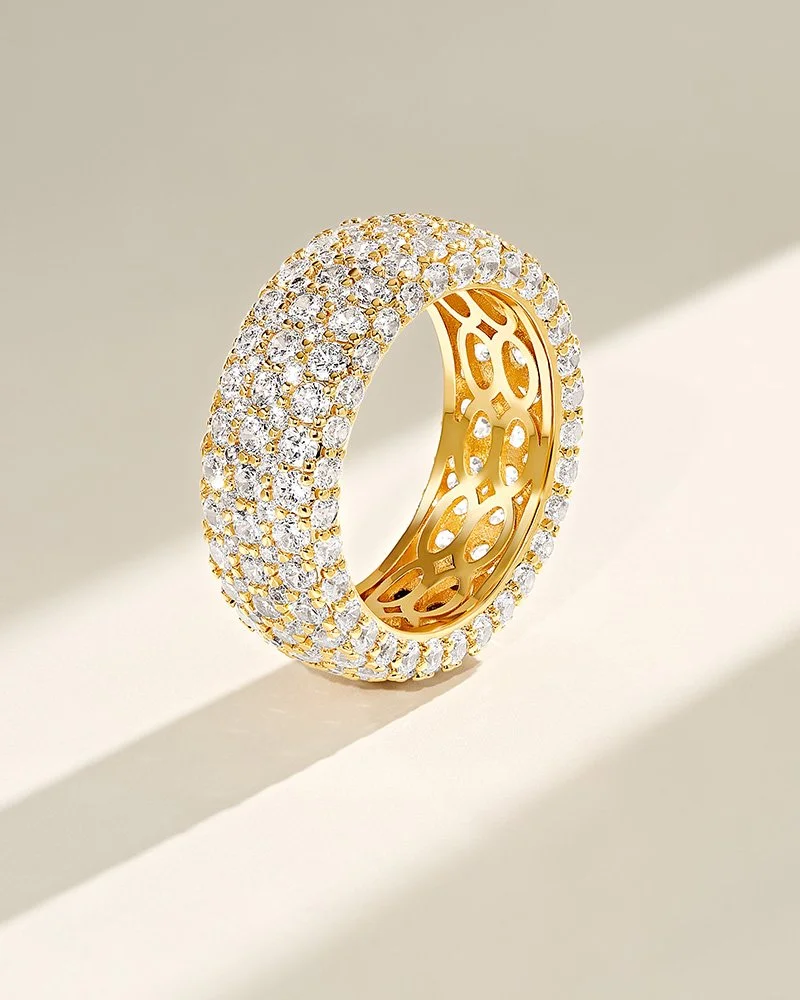
Sculptural form
Small objects can gain considerably more presence when light and shadow are allowed to define their shape.
In these images, the jewelry is treated less as an accessory and more as a piece of form. The compositions use shadow, negative space, and surrounding geometry to give the object more visual weight than its physical size might suggest.
That shift changes the way the piece is read. Rather than simply documenting the jewelry, the image asks the viewer to notice proportion, silhouette, edge, and the relationship between the object and the space around it.
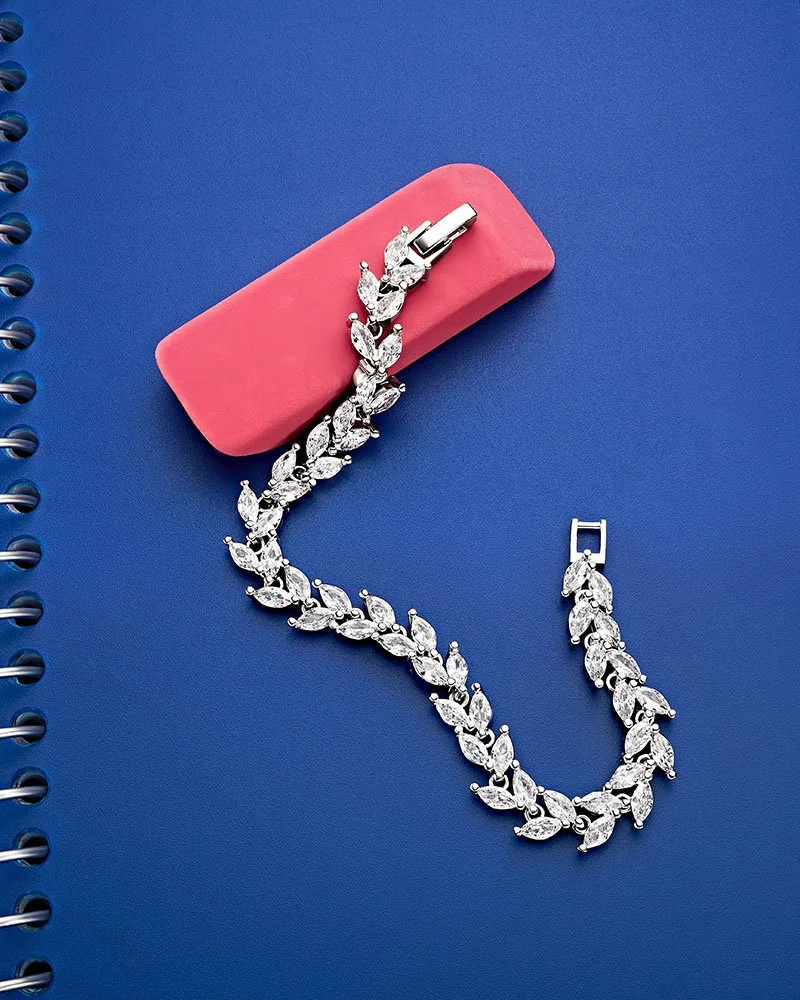
Controlled color
Color can provide structure without requiring a complicated set.
Restrained backgrounds and graphic relationships help separate the metal and stones while giving each frame a distinct visual identity. The color is not there simply as decoration. It establishes contrast, changes the apparent temperature of the material, and influences how much visual attention the jewelry carries inside the composition.
Because the objects are small, even modest changes in background color can have a significant effect on the overall image.
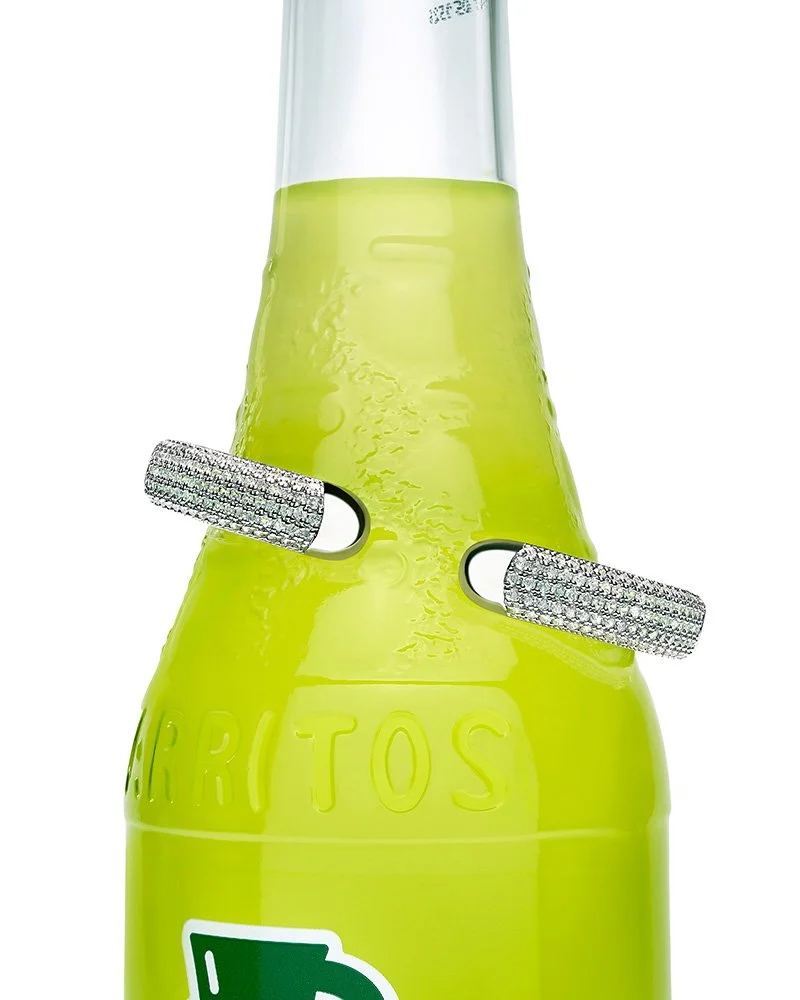
Playful context
Introducing an unexpected object changes the way the jewelry is perceived.
The prop does not need to explain the product literally. Its role can be more formal: creating scale, introducing contrast, shifting the composition, or adding a visual relationship that would not exist if the jewelry were photographed alone.
This approach gives the piece a different kind of presence. The jewelry remains the subject, but the surrounding object changes the character of the frame and makes the composition less predictable.
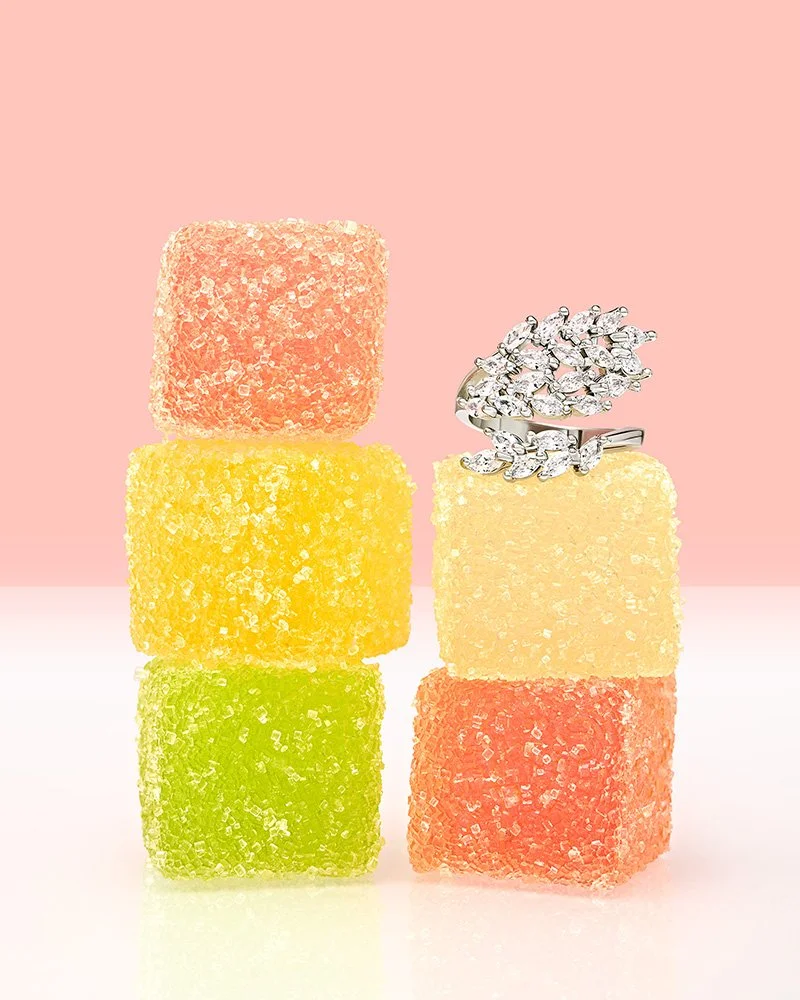
Giving small objects enough presence
Across the three approaches, the underlying problem remains the same: how to give a very small object enough visual weight to hold the frame.
The answer changes from image to image. Sometimes it comes from light and shadow. Sometimes from color. Sometimes from the relationship between the jewelry and another object.
The series is ultimately a study in how form, scale, material, and context can change the character of a small reflective subject without changing the object itself.
Planning a campaign or product shoot?
I help brands define the image library they actually need before production begins, then build still-life and product imagery designed to work across the full rollout.